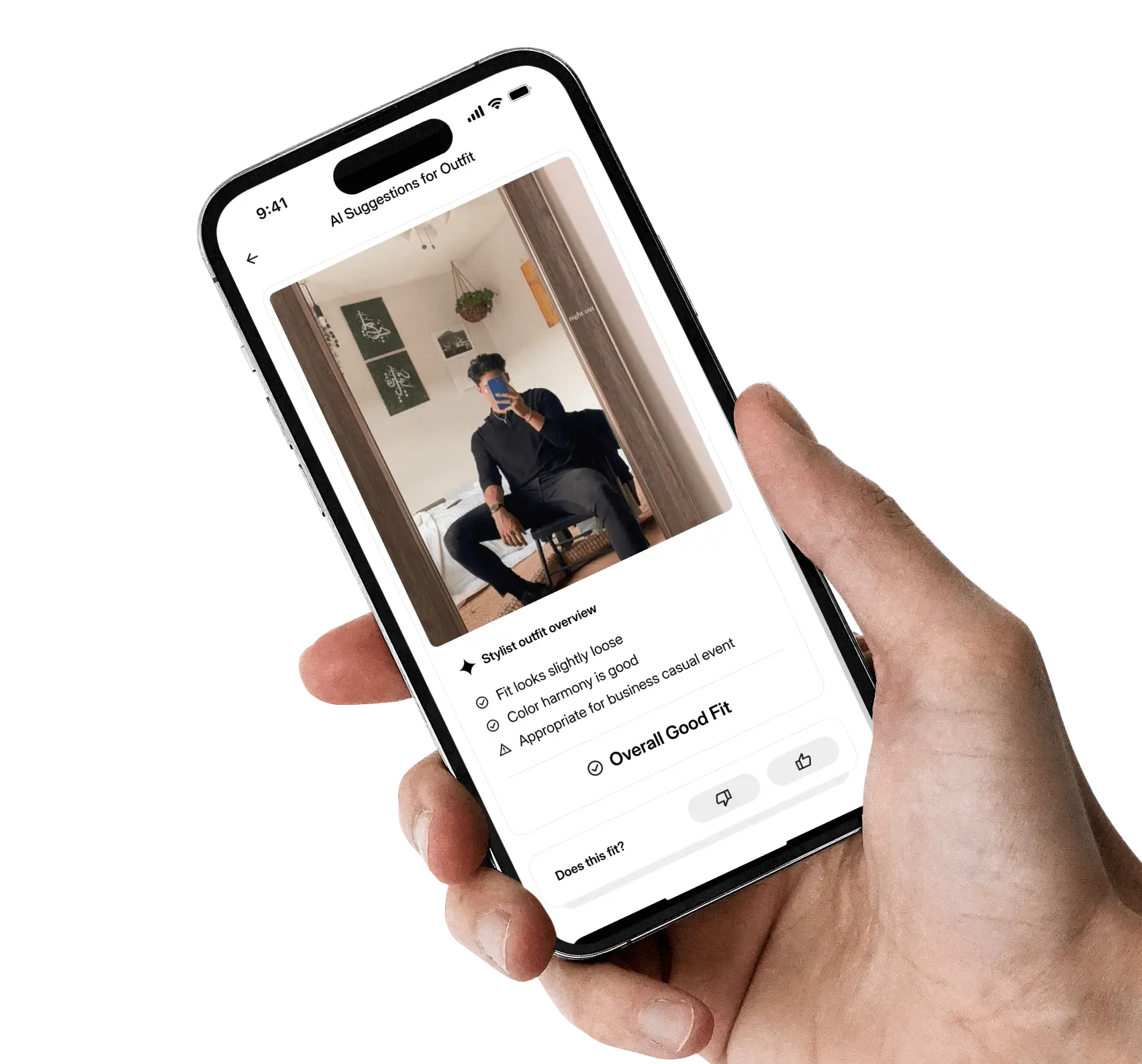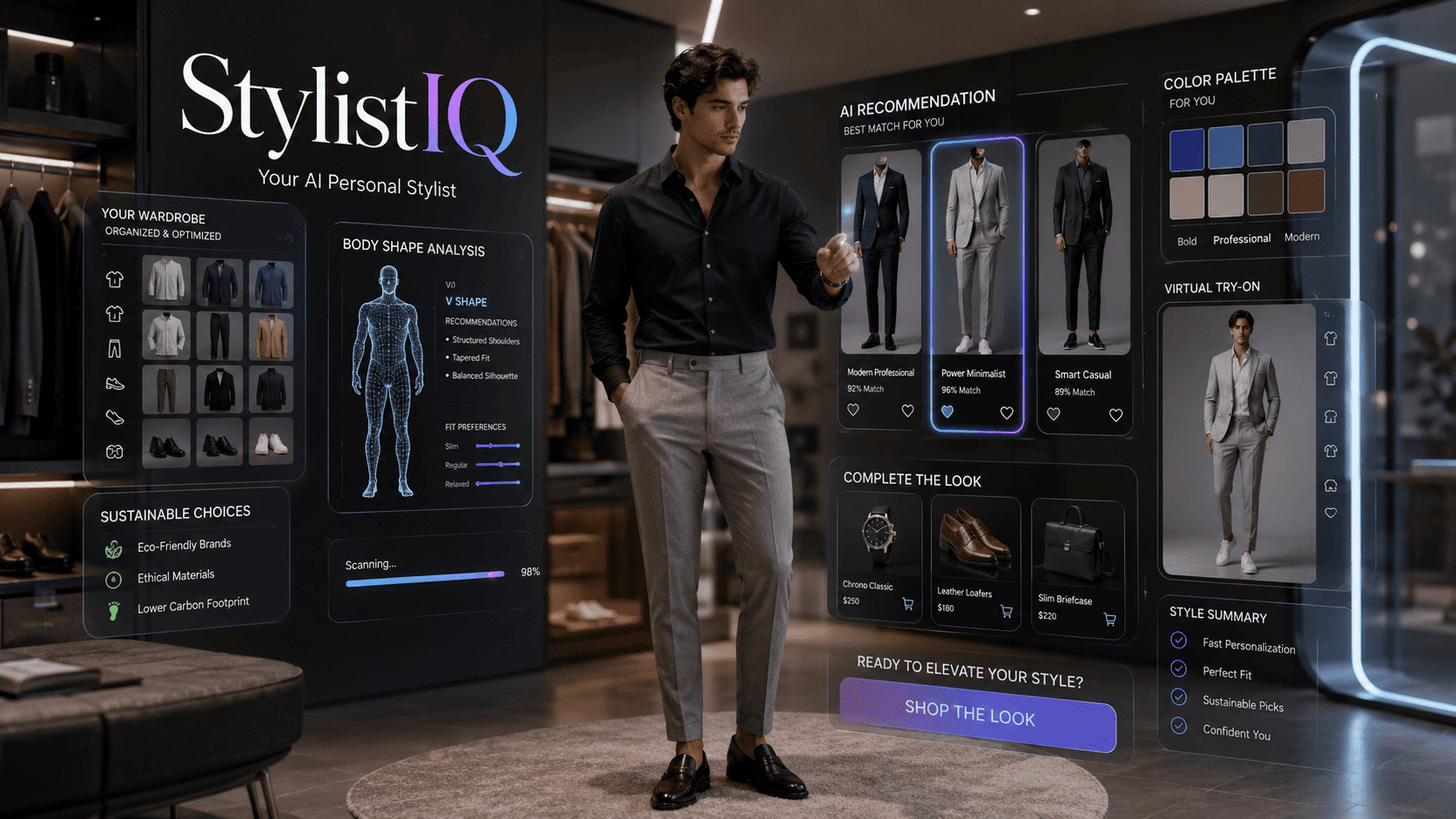
You want fast, practical fashion advice without paying a stylist. AI tools scan your wardrobe, suggest outfits, and personalize looks based on photos, body shape, and occasion so you can style yourself smarter and faster.
Free AI fashion stylists can deliver outfit suggestions, wardrobe coordination, and shopping recommendations tailored to your measurements and preferences with little to no cost.
This post explores how these tools work, which free options are most useful, how to get started, what benefits and limits to expect, and how AI can sharpen personal style now and into the future.
How AI Transforms Fashion Styling
AI helps stylists and shoppers by analyzing bodies, preferences, and item data to create tailored looks, predict what fits, and show garments on virtual models. It reduces trial-and-error, speeds up outfit selection, and surfaces combinations a person might not have considered.
AI-Powered Personalization
AI analyzes a user’s wardrobe photos, purchase history, and explicit style inputs (colors, silhouettes, occasion types) to build a detailed profile. It uses computer vision to tag garments by cut, fabric, pattern, and wear condition, then cross-references those tags with past choices to identify reliable preferences.
Recommendation engines combine this profile with contextual signals—weather, calendar events, trending colors—to produce daily outfits or shopping suggestions. Privacy controls let users limit which data sources feed personalization. For free tools, personalization may rely more on on-device analysis and fewer proprietary datasets, offering useful but slightly narrower suggestions compared with paid platforms.
Data-Driven Style Recommendations
AI systems ingest large catalogs—SKU images, metadata, user ratings—and mine that data to find statistically strong pairings (e.g., blazer + high-waist jeans) and item-to-item complementarities. They quantify compatibility with feature vectors for fit, color harmony, and formality, then score and rank outfit options.
Retailers use these models to automate cross-sells and create bundles that match a shopper’s size and aesthetic. Open-source or free stylist AIs often expose adjustable filters (budget, sustainability, brand) so users steer recommendations toward practical constraints. Transparency about why an item was suggested improves trust and helps users refine future results.
Virtual Fitting and Outfit Visualization
Virtual fitting uses body-measurement extraction from photos or device sensors to generate a 3D avatar or fit map. AI applies physics-informed drape models and size charts to predict how a garment will hang, indicating likely fit issues such as tightness at shoulders or length discrepancies.
Outfit visualization overlays garments on photos or renders mix-and-match looks in real time, letting users rotate views and change lighting. Free solutions may limit fabric simulation fidelity but still provide reliable visual cues for silhouette, proportion, and layering, which reduces returns and shortens decision time.
Popular Free AI Fashion Stylist Tools
This section highlights specific free AI styling tools, device and app compatibility, and the most relevant feature differences that affect everyday use. Readers get direct comparisons to decide which tool fits wardrobe editing, outfit generation, or shopping assistance.
Overview of Leading Platforms
Stitch Fix’s free AI features include outfit suggestions from uploaded photos and seasonal capsule planning; users get visual outfit boards and garment tagging. Vinted’s AI helps match secondhand items and suggests complementary pieces based on color and style metadata, aimed at thrifting and resale shoppers.
Amazon’s StyleSnap (free inside the Amazon app) identifies similar items from a photo and links to product pages, prioritizing fast shopping and price comparisons. Polyvore-like clones and smaller apps such as Pureple and Closet+ offer automated outfit generation and calendar scheduling for saved looks without subscription walls.
Tools vary in styling philosophy: resale-first (Vinted), commerce-first (Amazon), and closet-management-first (Pureple). Each emphasizes either discovery, purchase, or wearable rotation, which matters depending on if the user wants buys, outfits from existing clothes, or resale finds.
Compatibility with Devices and Apps
Most free AI stylist tools run as mobile apps on iOS and Android; StyleSnap requires the Amazon app, while Stitch Fix features appear inside its native app and web dashboard. Pureple and Closet+ provide dedicated iOS/Android apps and basic web export for outfit lists and packing lists.
Browser-based tools exist but often limit photo uploads or processing speed compared with mobile clients. Integration with camera roll and cloud storage (Google Photos, iCloud) is common; offline functionality is rare and typically restricted to outfit calendars or local closets. Third-party plugin compatibility, like browser extensions for shopping sites, appears mainly with commerce-focused tools.
Users should check app permissions: camera, photos, and optional location for store suggestions. Device performance affects image analysis speed—mid-range to high-end phones give the best real-time suggestions.
Key Features Comparison
- Stitch Fix (free features): outfit boards, garment tagging, basic capsule planning, photo upload. Strengths: curated styling logic; limits: deeper personalization often behind paywall.
- Amazon StyleSnap: photo-to-product matching, price filters, direct purchase links. Strengths: fast product discovery; limits: leans toward new retail inventory.
- Vinted AI: style match for secondhand listings, automated tagging, color palette matching. Strengths: resale focus and budget-friendly finds; limits: inconsistent listing image quality.
- Pureple / Closet+: closet import, outfit scheduling, packing lists, basic AI outfit suggestions. Strengths: strong closet management; limits: simpler suggestion models.
Feature checklist for quick comparison:
- Photo upload and outfit generation: Stitch Fix, StyleSnap, Vinted, Pureple
- Direct shopping links: StyleSnap, Stitch Fix (to a degree)
- Resale integration: Vinted
- Offline closet/calendar: Pureple, Closet+
- Price and size filters: StyleSnap, Vinted
Readers should weigh which specific feature—shop links, resale focus, or closet management—matters most.
Getting Started with AI Styling Platforms
AI styling platforms require a clear profile, good-quality wardrobe photos, and an understanding of how the system ranks and explains outfit choices. Users should prepare measurement details, consistent photo angles, and basic style preferences to get accurate, actionable suggestions.
Setting Up a User Profile
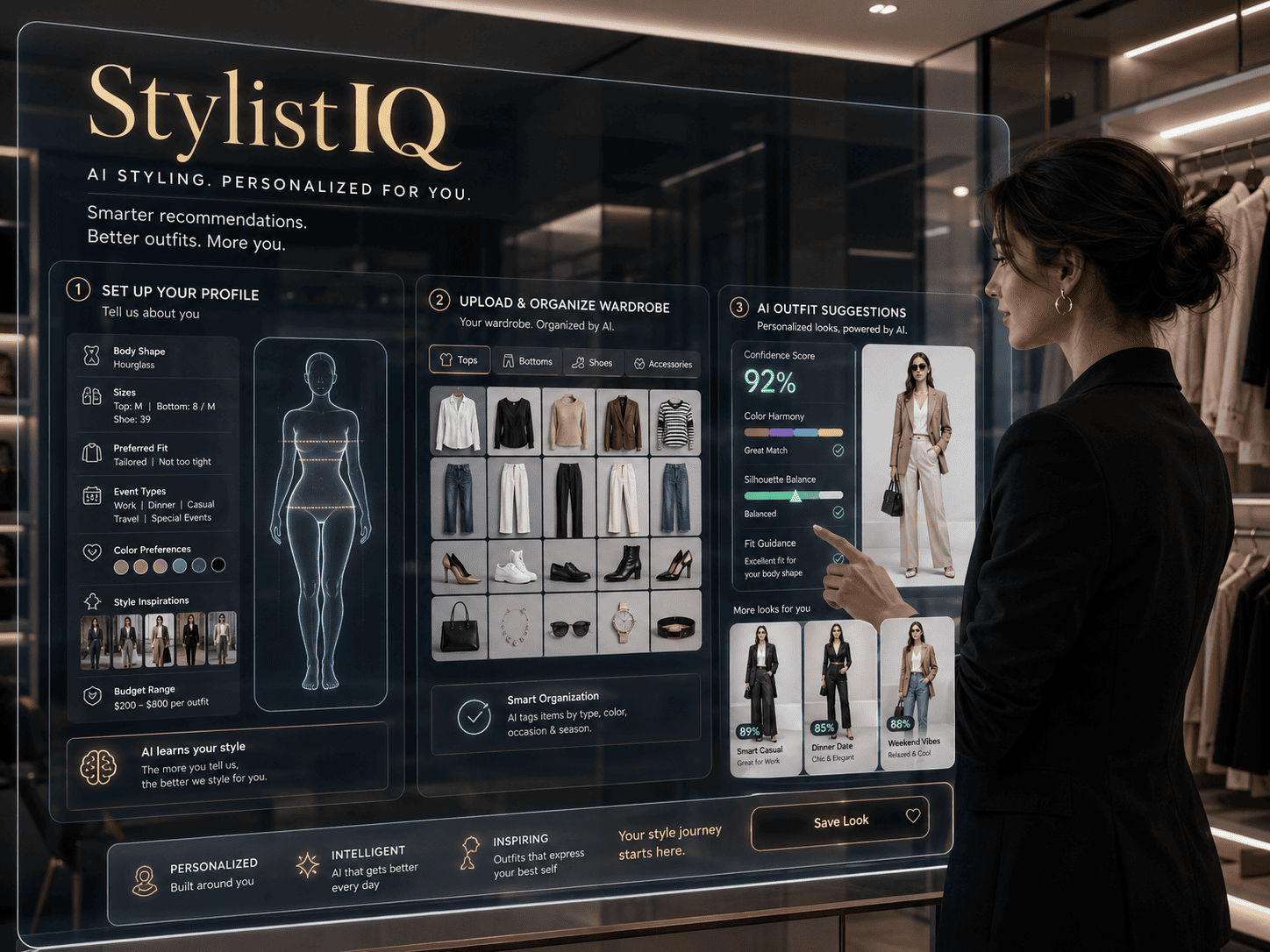
They should create an account and complete the profile fields that matter most: height, weight, body shape (e.g., pear, apple, rectangle), typical sizes for tops/bottoms, and preferred fit (slim, regular, relaxed). Adding event types (work, casual, formal) and color preferences lets the AI filter recommendations effectively.
They must select style inspirations or upload five-to-ten reference images showing looks they like. Linking to preferred brands or setting budget ranges improves item-matching and shopping suggestions. Finally, enabling notifications and syncing calendar or closet apps helps the platform suggest timely outfits for scheduled events.
Uploading and Managing Wardrobe Photos
They should photograph garments on a flat surface or mannequin and include at least one worn photo for each item when possible. Use natural light, neutral backgrounds, and straight-on plus angled shots; avoid heavy shadows and cropping that hides details.
Label each photo with item type, brand, size, color, fabric, and purchase year to improve metadata accuracy. Organize items into categories such as tops, bottoms, outerwear, shoes, and accessories. Use batch-upload tools and periodic audits to remove worn-out pieces and update new purchases for reliable recommendations.
Interpreting AI Suggestions
They must read each suggestion’s confidence score or tag (e.g., “high match,” “seasonal fit”) to prioritize outfits. Review the AI’s reasoning notes—fabric contrast, silhouette balance, or color harmony—to learn which rules the system applied.
Users should test suggested outfits by swapping one item at a time to see how changes affect the AI score. For shopping recommendations, check size guidance and cross-reference brand-specific fit charts before purchasing. When disagreement arises, provide feedback on the suggestion to help the model refine future picks.
Benefits of Using Free AI Fashion Stylists
Free AI fashion stylists lower costs, speed up outfit planning, and make trend experimentation low-risk. They analyze body types, color palettes, and existing wardrobes to give precise, usable suggestions.
Cost-Efficiency and Accessibility
Free AI tools remove stylist fees and subscription barriers, letting users access personalized advice without paying hourly rates that range from $50–$300 for human stylists. They run on web browsers or mobile apps, so anyone with a smartphone or laptop can use them.
Many free services include features such as virtual try-ons, automated color analysis, and outfit generators. These features replace multiple paid services—personal shopping, closet audits, and color consultations—reducing total spending.
Limitations exist: free versions often have capped features, ads, or fewer customization options. Still, for users who want basic personalization and budget-friendly guidance, the value-to-cost ratio is strong.
Time-Saving Wardrobe Management
AI stylists scan photos or import wardrobe inventories to build outfit combinations in seconds. They tag garments by style, color, and occasion, then generate daily or weekly looks, cutting down the minutes or hours typically spent deciding what to wear.
Scheduling and packing lists integrate with calendars or travel plans, so users get context-aware recommendations—e.g., business casual for a 9 a.m. meeting vs. layered looks for variable weather. This reduces decision fatigue on busy mornings.
Automated outfit suggestions also highlight gaps in a wardrobe, prompting targeted purchases rather than impulse shopping. That targeted approach saves time and prevents wardrobe clutter.
Experimenting with New Trends
AI suggests contemporary styling options by analyzing current fashion feeds, influencers, and retail inventories. It pairs trending items with pieces a user already owns, showing practical ways to adopt a trend without a full wardrobe overhaul.
Tools provide filters for risk level—conservative, bold, or experimental—so users can preview looks at varying intensities. Visual mockups and side-by-side comparisons help users evaluate a trend before committing to a purchase.
Because AI can simulate multiple combinations quickly, it encourages iterative experimentation. Users can test silhouettes, colors, and proportions virtually, reducing returns and buyer’s remorse when they decide to buy.
Limitations and Considerations
AI stylists offer fast outfit suggestions, automated closet organization, and trend spotting. They often trade control for convenience and can introduce risks around data handling, cultural tone-deafness, and inconsistent quality in free tiers.
Data Privacy and Security
Users often link photos, measurements, purchase history, and social profiles to get personalized looks. That creates sensitive datasets: facial images, body metrics, location-tagged shopping behavior, and payment tokens.
Check the service’s privacy policy for data retention length, third-party sharing, and if images are used to train models. Prefer platforms that offer explicit opt-out for model training, on-device processing, or the ability to delete all user data with a single request.
Look for industry-standard protections: TLS in transit, AES-256 at rest, and documented access controls. Two-factor authentication and session monitoring reduce account-takeover risk. Be cautious with services that import entire contact lists or social graphs without clear necessity.
Style Diversity and Cultural Sensitivity
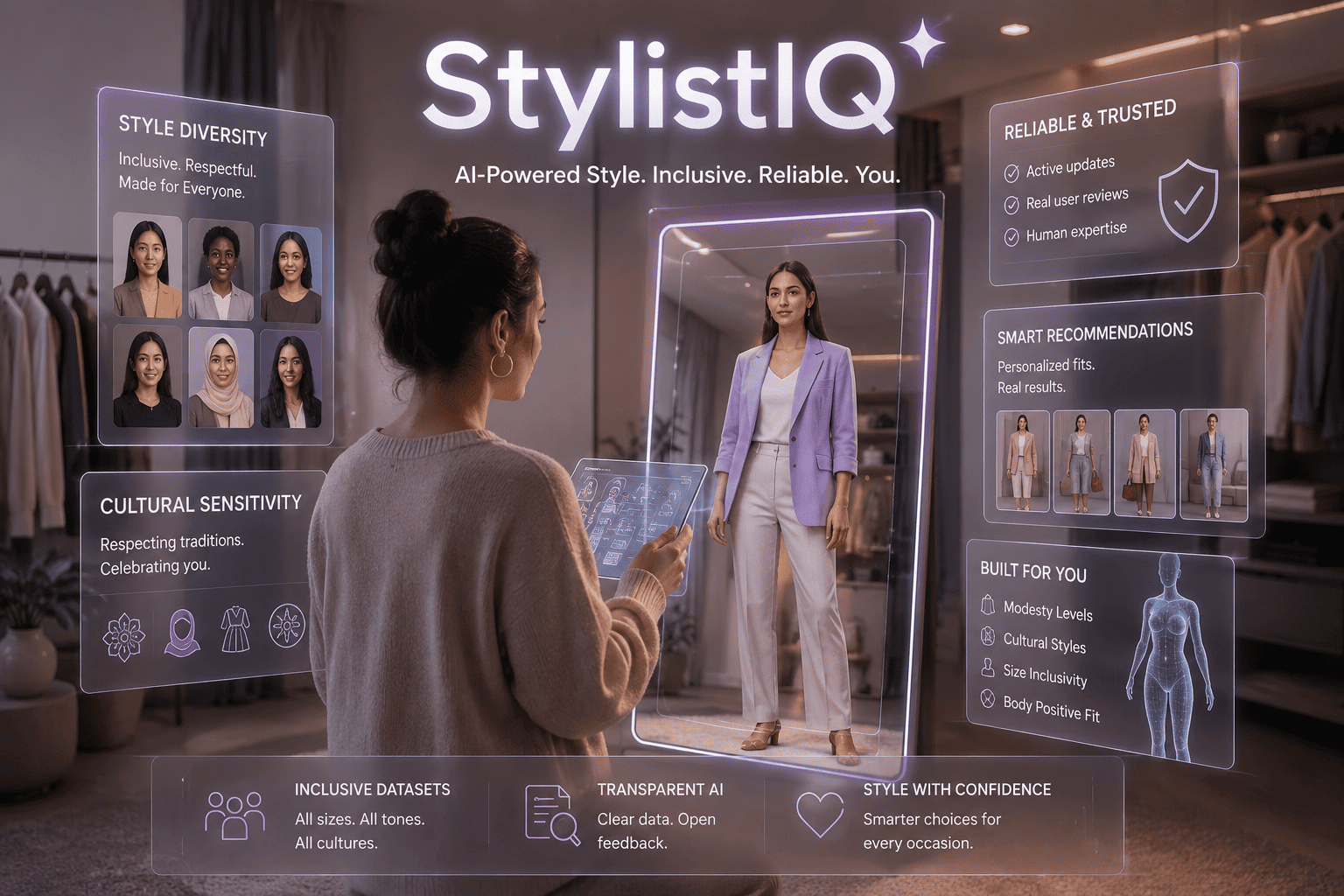
Free AI stylists often train on fashion imagery that skews toward Western, size-standard, and influencer-centered aesthetics. That bias can yield recommendations that ignore regional dress customs, religious modesty requirements, or size-inclusive fits.
Users should test outputs across different body shapes, skin tones, and cultural contexts before relying on them. Platforms that allow manual preference toggles (e.g., modesty level, cultural styles, size ranges) produce safer results than those that only rely on implicit signals from uploaded photos.
Developers must disclose dataset composition and provide avenues for community feedback. Users can look for services that list explicit coverage of sizes, ethnicities, and regional style sets to reduce the risk of receiving tone-deaf or impractical suggestions.
Reliability of Free Services
Free tiers frequently limit compute, customization, and customer support. That leads to inconsistent styling: repeat suggestions, poor fit estimation, and outdated trend data due to throttled model updates.
Expect rate limits, watermarking, lower-resolution outputs, and restricted export formats. Paid plans commonly unlock higher-resolution image processing, extended wardrobe memory, and human stylist review—features that materially improve reliability.
Verify recent update logs and user reviews to confirm active maintenance. For critical events (weddings, interviews), cross-check AI suggestions with human expertise or use paid guarantees; free options may not offer liability or alteration support.
Enhancing Personal Style with Artificial Intelligence
AI analyzes body proportions, color palettes, lifestyle needs, and closet inventory to make precise outfit recommendations and shopping lists. It speeds selection, reduces decision fatigue, and helps users prioritize versatile pieces and ethical brands.
Building Capsule Wardrobes
AI scans a user’s current wardrobe via photos or inventory lists to identify core items that repeat across outfits, such as a navy blazer, white button-down, dark jeans, and neutral flats. It then suggests a compact set of 25–40 pieces optimized for that user’s climate, work routine, and preferred silhouettes.
The system ranks items by versatility and fit scores, highlighting gaps (e.g., no mid-layer or no weatherproof outerwear) and proposing specific replacements with links and size recommendations. It can produce weekly capsule rotations, outfit pairings, and packing lists tailored to trip length and activities.
User controls allow toggling budget, brand preferences, and formality level. This enables AI to favor sustainable materials, independent labels, or high-street options while keeping the capsule cohesive and seasonally appropriate.
Sustainable Style Choices
AI evaluates garment lifecycle data—materials, production origin, care requirements, and resale value—to recommend lower-impact options when shopping or mending. It flags polyester-heavy pieces with low recyclability and promotes natural fibers or certified recycled materials when available.
The tool advises repair or alteration for items with high sentimental or resale value and suggests local repair shops or DIY patching steps with estimated costs. For shopping, it lists brands with transparent supply chains and offers predicted resale price ranges to support circular choices.
AI also tracks wardrobe usage rates, identifying underused garments for donation or resale and calculating potential CO2 and water savings from keeping versus replacing items. Users receive concrete actions: mend, resell, buy secondhand, or choose certified alternatives.
Future Trends in AI Fashion Styling
AI styling will merge live visual tools with personalized algorithms and extend styling into full shopping journeys that include try-on, fit data, and purchase paths. Expect tighter links between AI recommendations, real-time fitting, and retail inventory to reduce returns and speed decisions.
Integration with Augmented Reality
AI-driven AR will overlay garments on a user’s live camera feed while adjusting for posture, lighting, and body proportions. Models will use neural rendering to map fabric drape and stretch, so virtual garments reflect how specific materials behave on a particular body type.
Retailers and third-party apps will feed inventory data so AR try-ons show exact SKUs, sizes, and available colors. This capability reduces mismatch between expectation and product, lowering return rates and increasing conversion.
Privacy-preserving body scanning will become standard, using on-device processing and ephemeral meshes rather than storing raw images. Brands will combine AR try-on metrics with purchase history to refine size recommendations and suggest complementary items.
Expansion into Virtual Shopping Experiences
Virtual shopping will move beyond single-item try-ons into guided, contextualized experiences within 3D stores and social spaces. AI agents will act as stylists inside those spaces, assembling full outfits from multi-brand catalogs and explaining choices based on measured fit, occasion, and budget.
Shops will integrate live inventory APIs and dynamic pricing so users can purchase directly from the virtual scene. Logistics links—real-time stock, shipping windows, and local pickup—will be visible during the shopping flow to set clear expectations and reduce friction.
Data from virtual fittings will feed demand forecasting and production planning, enabling brands to adjust assortments by region and size. Standards for interoperable garment metadata (measurements, material properties, rigging) will speed cross-platform experiences and reduce duplication of 3D assets.