Finding your personal fashion style isn’t about copying trends or dressing like someone else. It’s about understanding what feels right for you. The clothes you wear every day should match your personality, your lifestyle, and how you want to show up in the world.
Many people reach a point where they wonder, “What is my style actually?” Maybe your wardrobe feels random, or maybe you like many different looks but aren’t sure how they fit together. The good news is that discovering your style is a process, and anyone can do it with a little observation and experimentation.
When you understand your style, shopping becomes easier, getting dressed takes less time, and your wardrobe starts to feel more intentional.
Why Knowing Your Style Matters

Your clothing sends signals about who you are. Whether it’s casual, polished, artistic, or relaxed, people form impressions before you say a word.
But the real benefit of having a clear style isn’t about impressing others. It’s about making everyday decisions simpler.
When you know what works for you:
-
You stop buying clothes you never wear
-
Your outfits start to feel more cohesive
-
Shopping becomes more focused
-
Your wardrobe feels more “you”
Instead of chasing trends, you build a closet that supports your daily life.
Start With Your Current Wardrobe
A good place to begin is your own closet.
Look through your clothes and find the items you wear most often. These are the pieces that already fit your lifestyle and taste.
Ask yourself a few questions:
-
Which pieces do I reach for the most?
-
What colors appear again and again?
-
Do I prefer fitted or relaxed clothing?
-
Which outfits make me feel confident?
You might notice patterns. Maybe you lean toward simple neutral outfits, or maybe you enjoy bold prints and expressive pieces. These small observations help reveal your natural preferences.
At the same time, notice the clothes you rarely wear. Sometimes we keep items because they looked good in the store, but they never truly felt right. Those pieces can teach you just as much about your style.
Pay Attention to What You Don’t Like
Knowing your dislikes can be just as helpful as knowing your favorites.
For example, you might realize:
-
You dislike stiff fabrics
-
You avoid very bright colors
-
You rarely wear overly formal clothing
-
Certain cuts feel uncomfortable
Once you identify these patterns, it becomes easier to avoid buying things that won’t work for you. Over time, this helps your wardrobe become more consistent.
Look for Inspiration
Your style doesn’t develop in isolation. It’s influenced by things you enjoy outside of fashion as well.
Think about the visual things you’re naturally drawn to:
-
Interior design
-
Art and photography
-
Movies or music
-
Travel destinations
-
Social media creators you follow
If you love minimal interior design, you may prefer simple and structured clothing. If you enjoy colorful art or vintage aesthetics, your wardrobe might reflect that creativity.
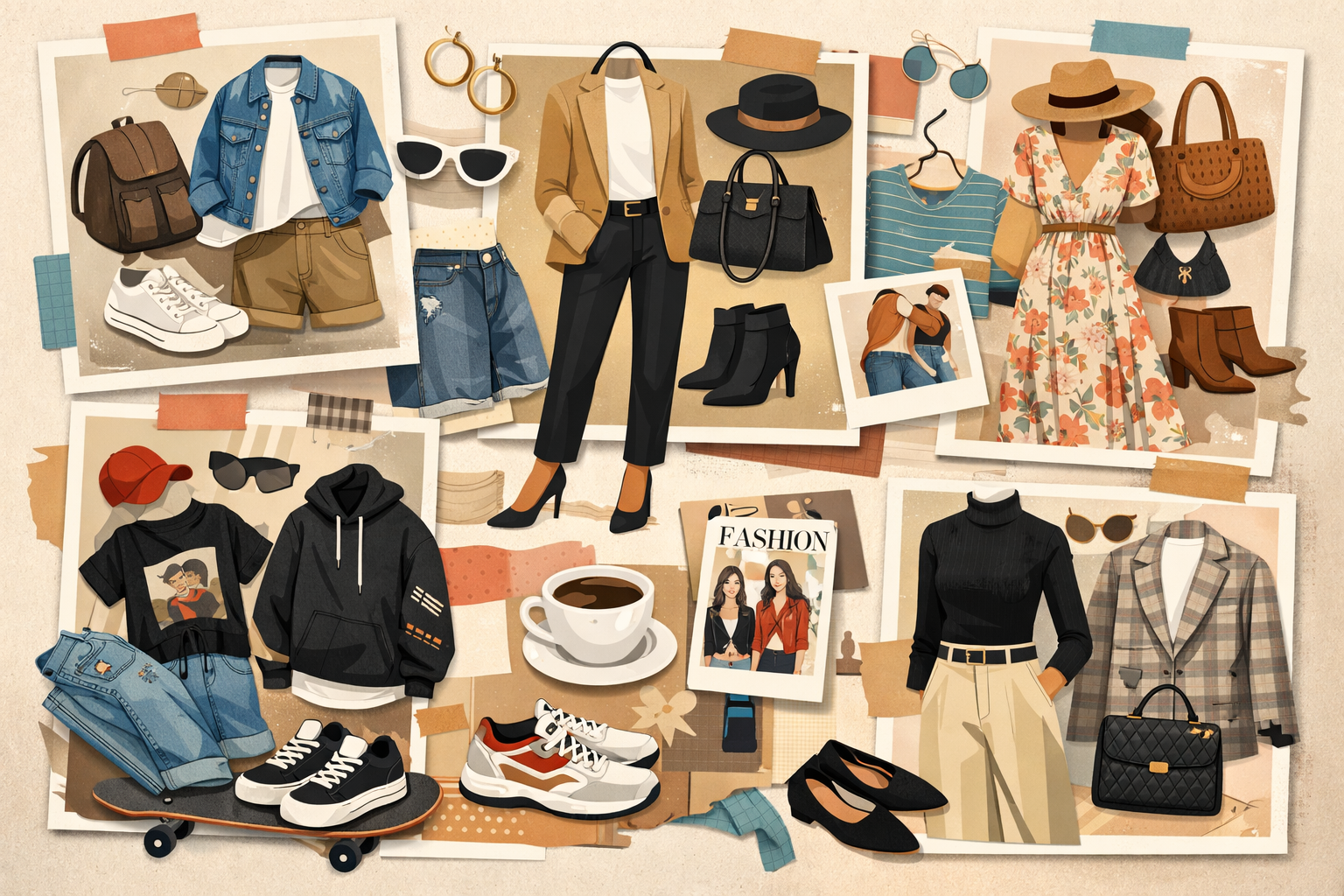
A helpful exercise is creating a small inspiration board. Save images of outfits or styles that stand out to you. After a while, you’ll likely start seeing similarities between them.
Learn the Common Style Categories
Sometimes it helps to see where your preferences fit within broader style types.
Some common fashion styles include:
Classic
Timeless pieces like tailored blazers, simple dresses, and neutral colors.
Minimalist
Clean lines, simple shapes, and a small, well-organized wardrobe.
Casual
Relaxed clothing such as denim, basic tees, and comfortable layers.
Bohemian
Loose fabrics, natural textures, and artistic patterns.
Streetwear
Urban influence with hoodies, sneakers, and oversized silhouettes.
Romantic
Soft fabrics, flowing shapes, and delicate details.
You don’t need to fit into just one category. Many people blend elements from several styles to create something that feels personal.
Consider Fit, Shape, and Color
Clothing style isn’t only about taste. Fit and color also play a big role.
Certain shapes and cuts naturally suit different body types. For example:
-
Structured jackets can create definition
-
High-waisted pants may balance proportions
-
Flowing fabrics can add movement
Color can also make a big difference. Some shades naturally complement your skin tone more than others.
Pay attention to the colors that make you feel more energized or confident. Those tones often become the foundation of your wardrobe palette.
Try New Things Occasionally
Even if you think you know your style, it’s still useful to experiment.
Sometimes a piece you wouldn’t normally choose ends up becoming a favorite. Trying new combinations or silhouettes can help refine your style over time.
Small changes are an easy way to explore:
-
Add an accessory you wouldn’t normally wear
-
Try a different jacket shape
-
Combine pieces from different style categories
The goal isn’t to reinvent your wardrobe constantly. It’s simply to stay curious about what works.
Use Style Quizzes for Extra Insight
If you’re unsure where to start, fashion style quizzes can be a helpful tool.
These quizzes typically ask about your preferences in areas like:
-
colors
-
clothing shapes
-
lifestyle
-
outfit choices
The results usually suggest style categories that match your answers. While they shouldn’t define your style completely, they can offer a useful starting point.
Many people discover new directions for their wardrobe through these kinds of tools.
Build a Wardrobe That Reflects You
Once you have a clearer sense of your style, you can start shaping your wardrobe more intentionally.
A good approach is to focus on a mix of:
Reliable basics
Items like well-fitting jeans, simple tops, and versatile shoes.
Signature pieces
Clothing that reflects your personality, such as a patterned jacket or unique accessories.
Seasonal items
Pieces that support your lifestyle and climate.
Over time, these pieces begin working together naturally. Getting dressed becomes easier because most of your wardrobe already fits your style.
Let Your Style Evolve
Personal style isn’t fixed forever. As your life changes, your wardrobe will change too.
New interests, new environments, and new experiences all influence how you dress.
Instead of trying to define your style once and for all, think of it as something that develops gradually. Pay attention to what feels comfortable, expressive, and authentic to you.
The most interesting wardrobes usually belong to people who allow their style to grow with them.
Final Thoughts
Discovering your personal fashion style takes time, but it doesn’t have to be complicated. By observing what you already enjoy wearing, noticing patterns in your preferences, and exploring inspiration from different places, you can slowly build a wardrobe that feels natural.
The goal isn’t to fit into a specific category or follow every trend. It’s simply to understand what makes you feel comfortable and confident in your own clothes.
When your wardrobe reflects who you are, getting dressed becomes one of the easiest parts of your day.